When roof replacement is the better long-term move
Replacement starts to make sense when repairs are no longer solving the real problem. That can happen when shingles are brittle, underlayment is failing beneath tile, leaks appear in unrelated areas, or the roof is old enough that each repair only buys a little time. In the Antelope Valley, sun and wind can shorten the life of materials that might last longer in milder climates.
A good replacement plan should address more than the visible roofing material. Deck condition, ventilation, underlayment, flashing, drip edge, valleys, penetrations and clean water flow all affect how the new roof performs. The best result is a roof system that is easier to maintain and better prepared for heat, dust and high wind.
Replacement questions homeowners usually ask
- Can this section be repaired, or is the whole roof aging out?
- Which material makes sense for sun, wind and budget?
- Will damaged wood or ventilation issues be checked during the work?
- How should the project be timed around weather and access?
Before deciding, read roof repair vs. replacement and how long roofs last locally.
When replacement becomes the smarter roofing decision
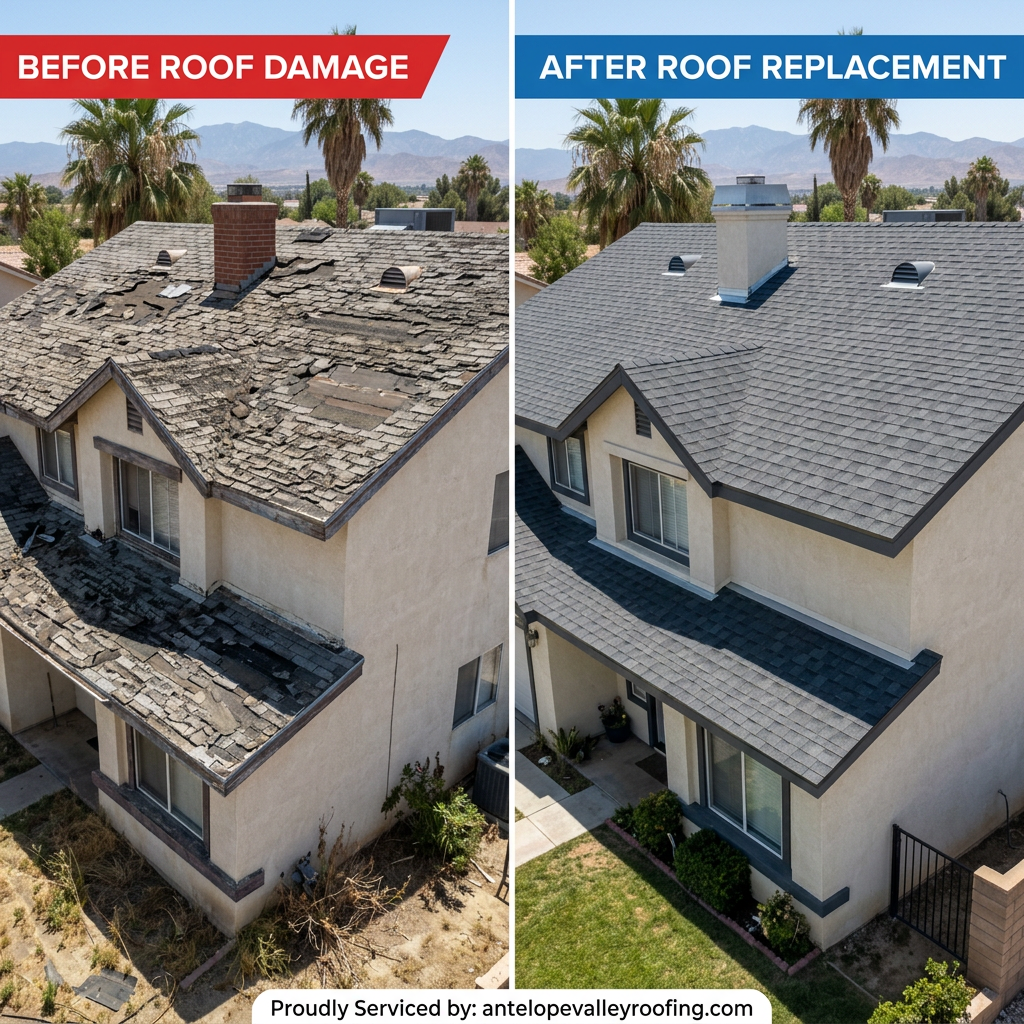
Roof replacement starts to make sense when the roof is no longer failing in one isolated place. If several areas are brittle, patched, curled, cracked or leaking, a repair may only buy a short amount of time.
The Antelope Valley climate can speed up material wear. Heat dries out shingles and sealants, wind pulls at exposed edges, and sudden rain finds weaknesses around valleys, vents, flashing and older repairs. A roof can look acceptable from the street while the details are already near the end of service life.
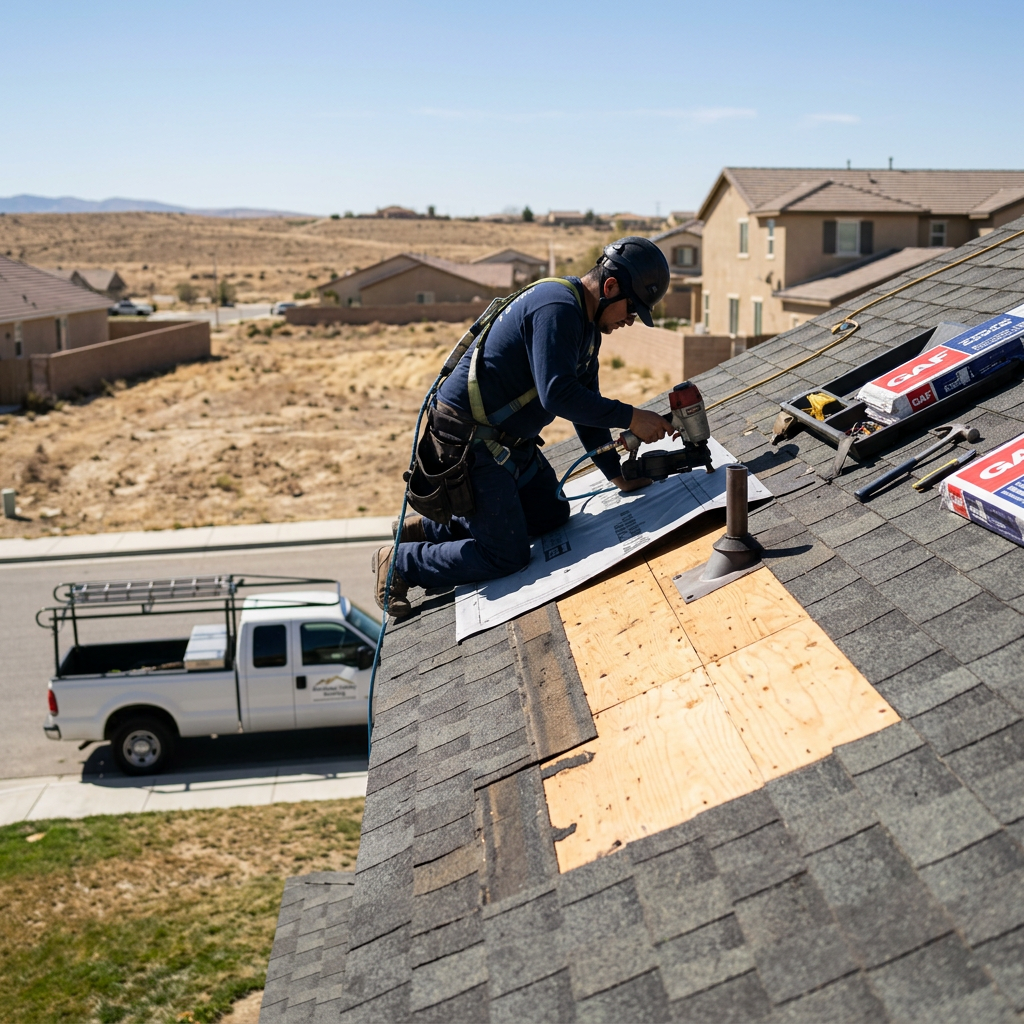
A good replacement plan should address underlayment, ventilation, decking condition, flashing, roof penetrations, edge metal, material choice and cleanup. The goal is not only a new roof surface, but a roof system that is better prepared for sun, wind and future storms.
Repair may still work
One damaged section, one leak source, newer roofing material and solid surrounding roof areas can point toward a focused repair.
Replacement may be better
Multiple leaks, widespread brittleness, older materials, soft decking or repeated patch failures usually make replacement worth comparing.
Helpful next steps:
compare roof repair,
roof replacement,
emergency roof repair,
local service areas and
requesting a roof check.