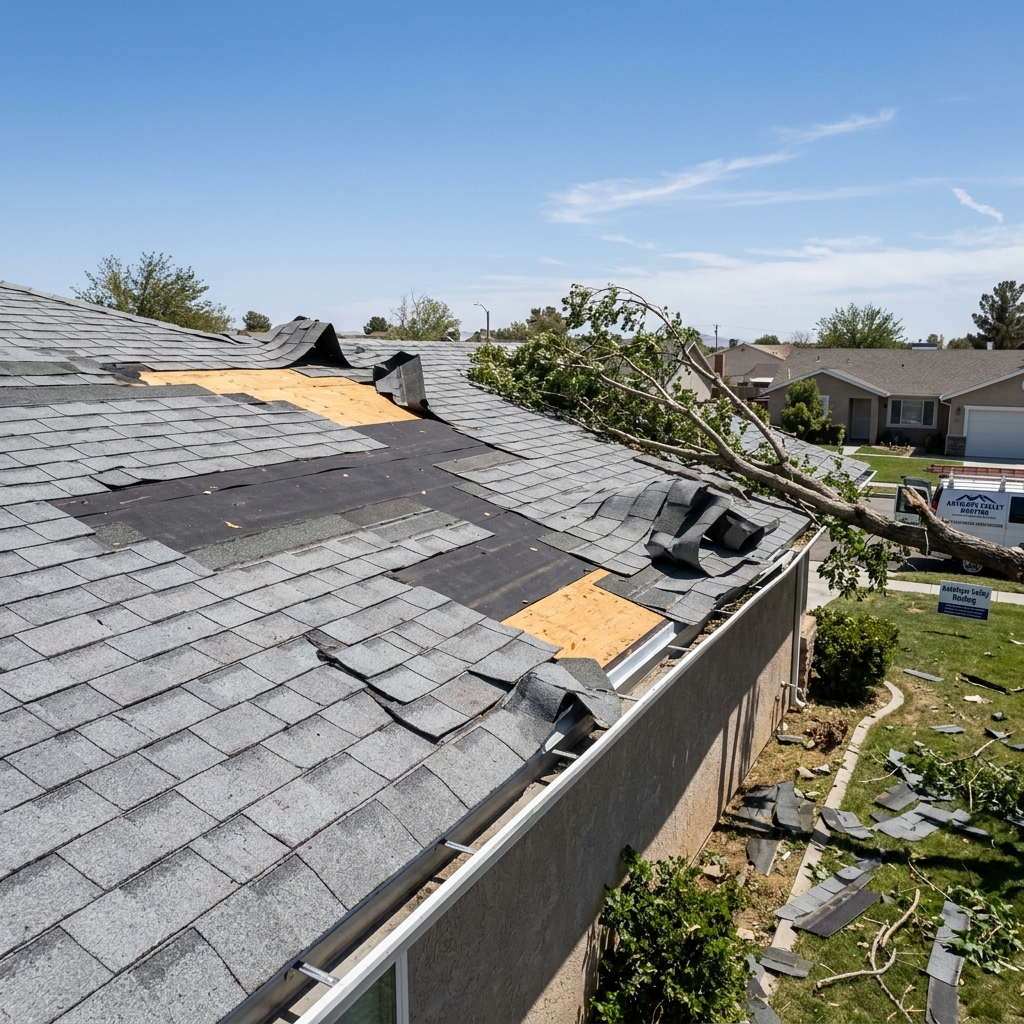
Mojave roofing help for high-desert homes
Mojave roofs need to stand up to heat, wind and dry-weather wear. A roof that looks acceptable from the ground may still have weak sealant, lifted shingles, damaged flashing or roof penetrations that become problems during wind-driven rain.
Homeowners should start by noting the visible symptoms: ceiling stains, missing shingles, broken tiles, lifted edges, exposed underlayment, debris impact, clogged valleys or water showing near vents and walls. Those details help determine whether the next step is a focused repair, emergency tarping, inspection or replacement planning.
Common roofing needs in this area
- Roof leak tracing around vents, valleys, roof edges and wall transitions.
- Shingle roof repair after wind, sun damage or missing tabs.
- Tile roof repair for cracked tiles, slipped pieces and underlayment concerns.
- Emergency roof tarping when decking or underlayment is exposed.
- Roof replacement planning when damage is widespread or the roof is aging.